
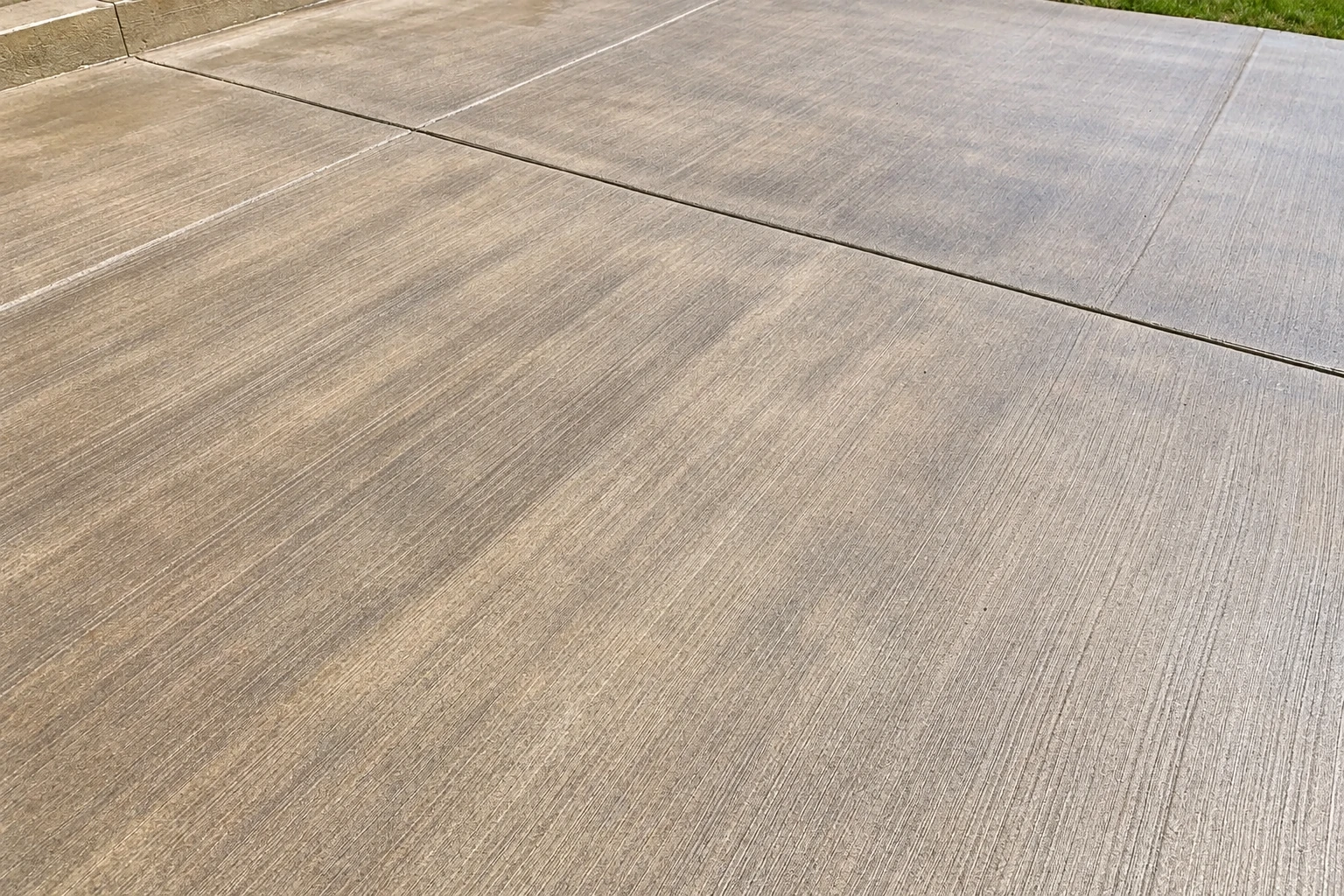
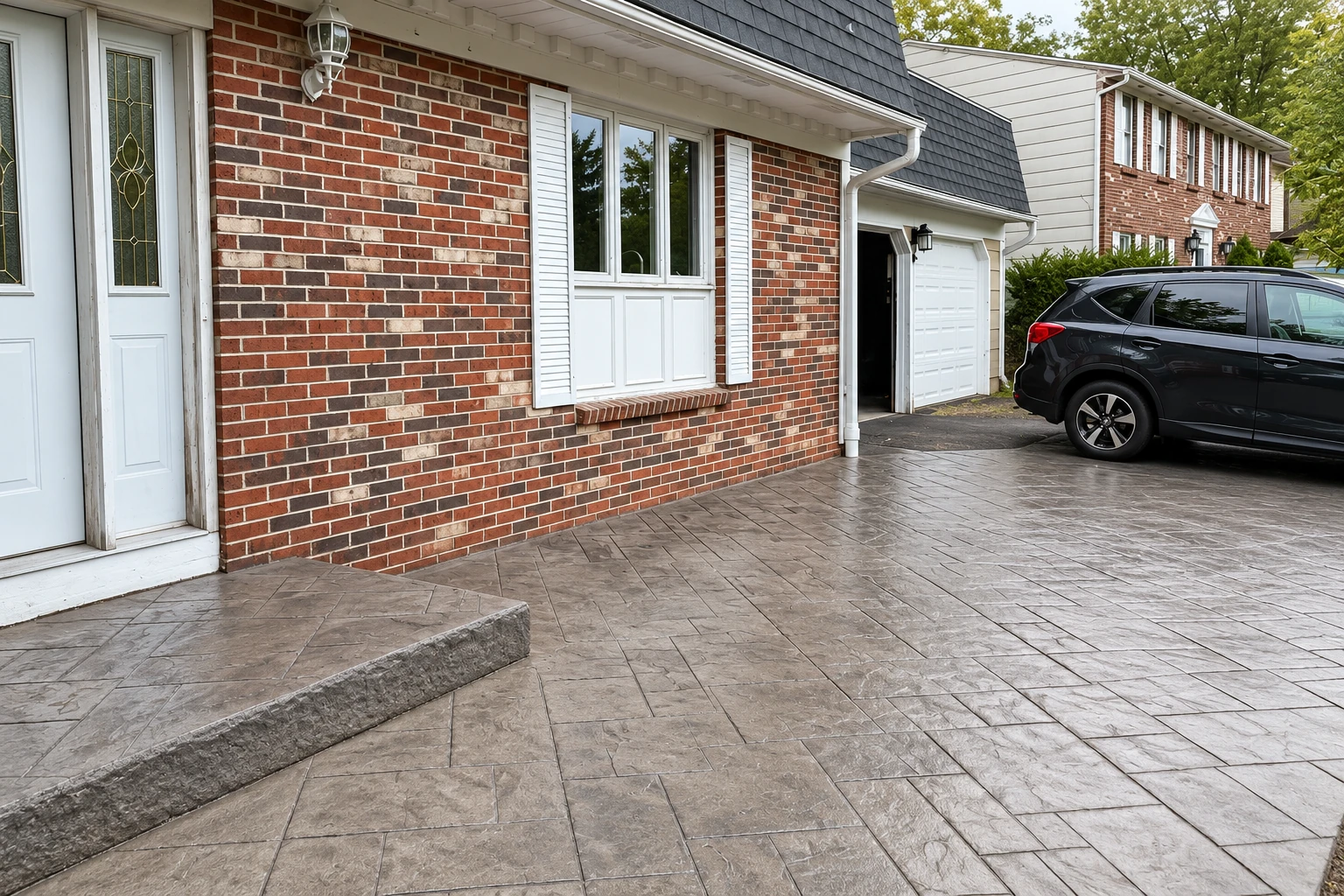
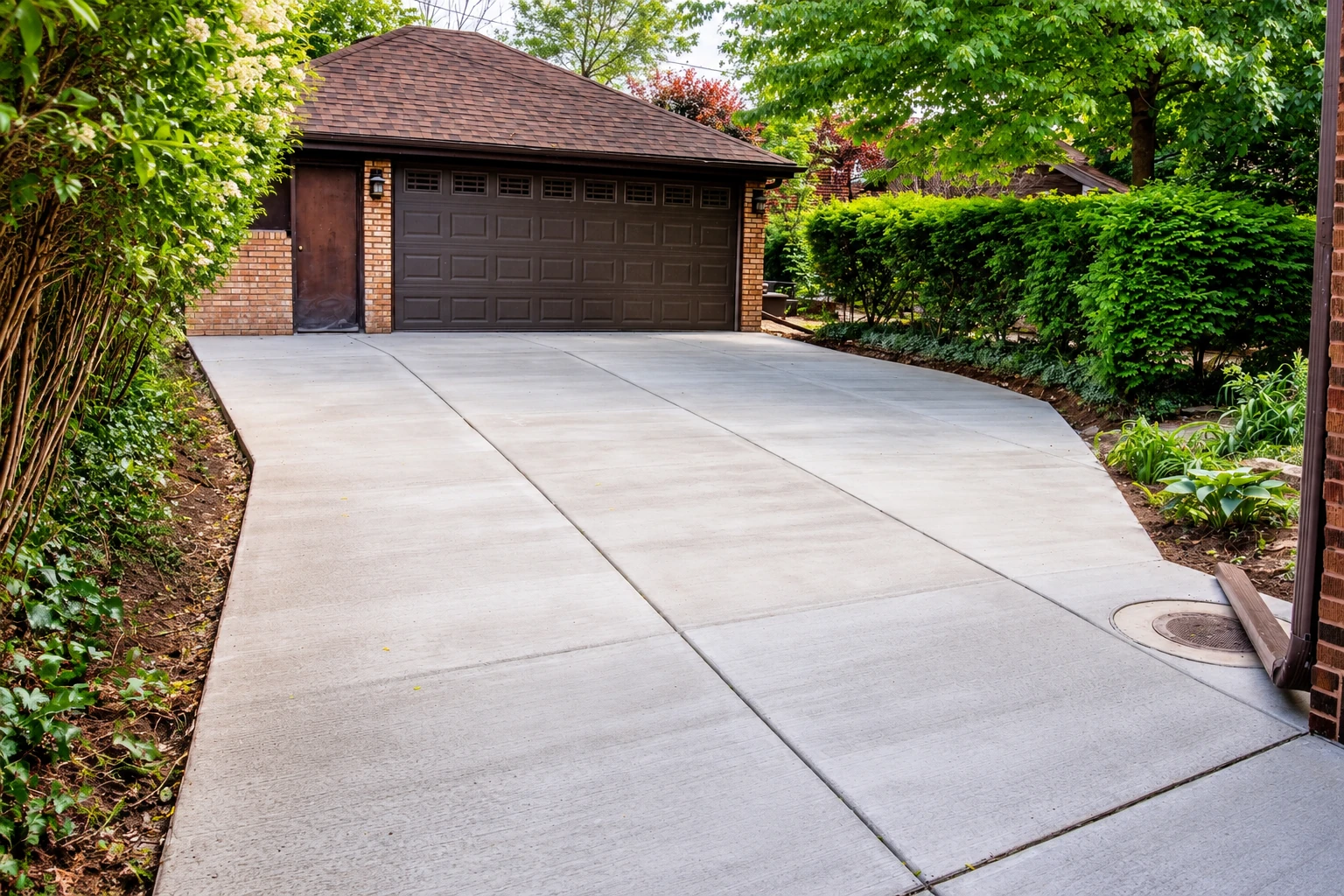
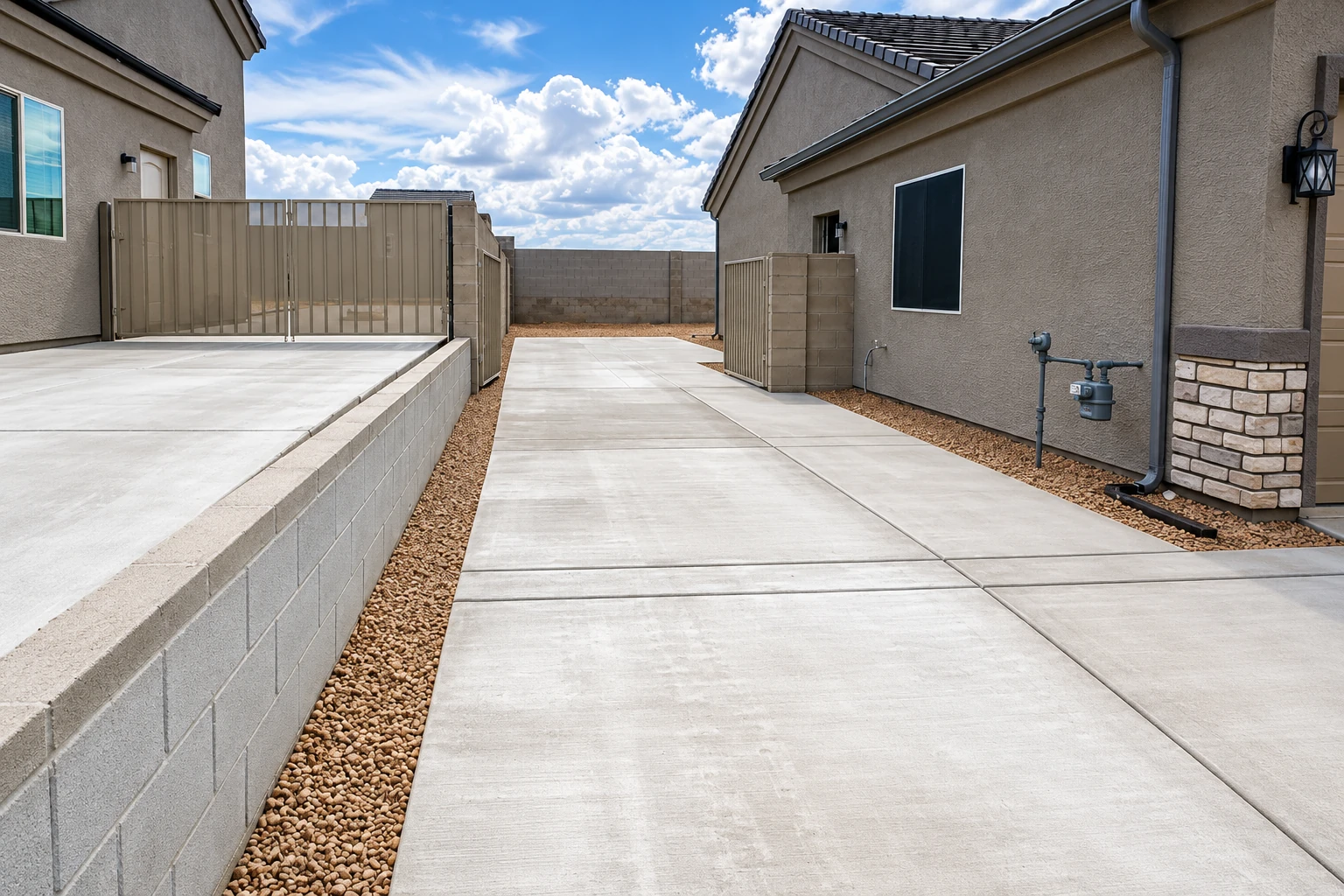
Concrete driveway building
When your driveway has cracked through, sunk at the apron or holds water, our concrete driveway building starts with tearing it out, digging to firm ground and packing a new base.
Oxford Concrete Company is a concrete contractor based in Oxford, MS. We build driveways, walks, steps, patios and slabs for homeowners, landlords and property managers across the city, starting with the ground underneath and where the water goes.
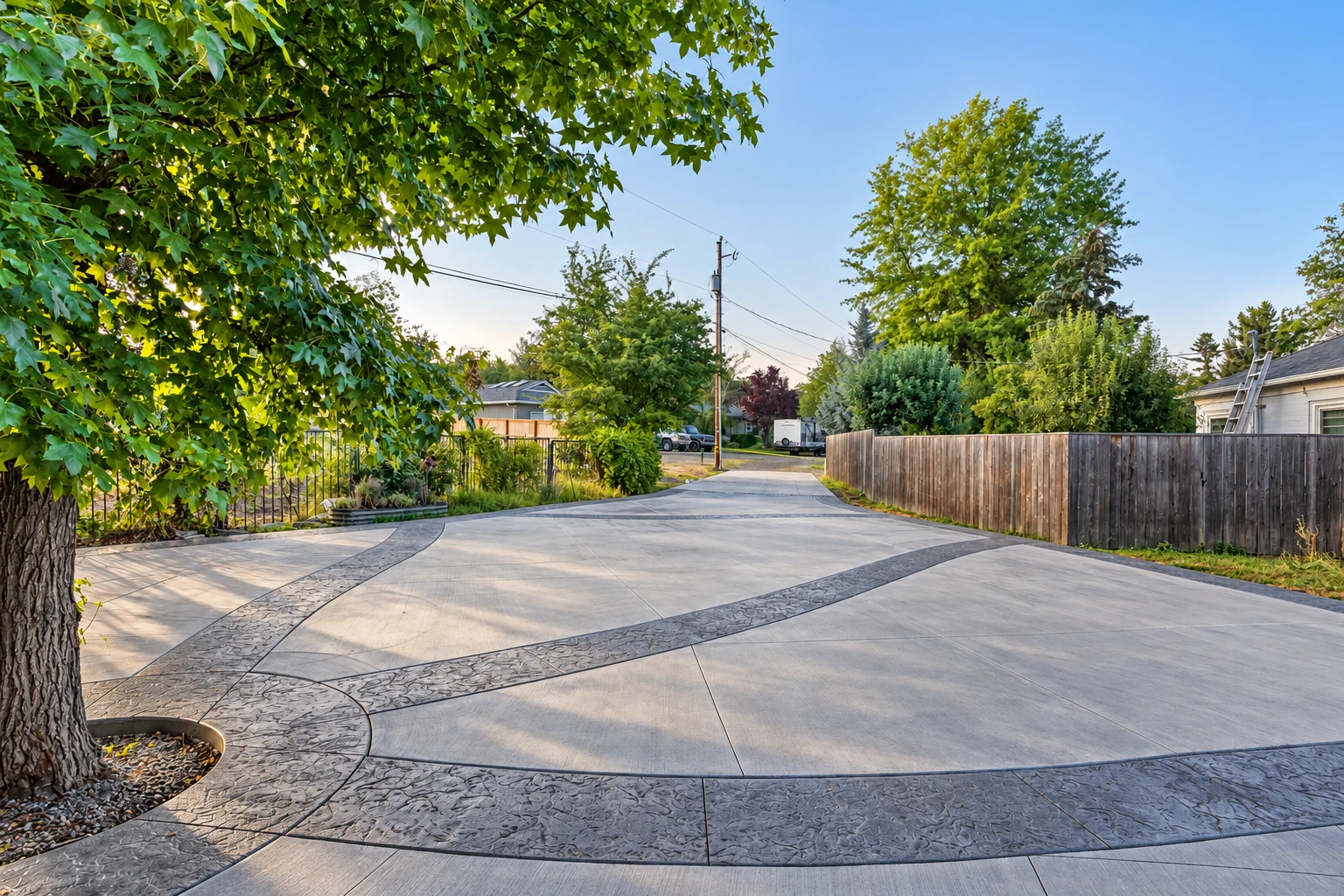
Oxford Concrete Company builds and replaces driveways, walks, steps, patios, garage floors and slabs across Oxford. Most of it is flatwork, the concrete that lies on the ground, and most calls start with something you can see, like a crack that keeps growing, a section that's sunk or water standing where it shouldn't.
Around Oxford we work on family homes and on a lot of rental houses. At rentals especially, I see walks and steps that have been patched more than once, because each patch went on top of the same bad ground. The crack comes back in the same spot, and the landlord pays for it again.
Driveways here usually give out at the apron, where they meet the street, and along the edges where dirt has washed out from under them. When we break an old one out, we often find the base was raked level and never packed, so it settled right along with the ground. In almost every case the fix starts under the concrete, not on top of it.
When your driveway has cracked through, sunk at the apron or holds water, our concrete driveway building starts with tearing it out, digging to firm ground and packing a new base.
A patio off the back door has to fall away from the house. We set that grade first, so rain runs to the yard instead of toward your foundation.
Stamped concrete gives a patio or walk the look of stone or brick in one pour. The pattern only holds up if the base under it stays put.
For front walks that have heaved, split or tipped at the seams, we replace the bad sections, rebuild what's under them and leave a level path to the door.
When a garage floor is cracked, pitted or dusting, we pour a new slab with rebar, steel bars that hold it together, sloped slightly toward the door.
Colored, stained or textured finishes for a slab that sits where people see it. We help you pick one that fits how you'll use the space and keep it clean.
Where a yard slopes down into a drive or patio, a poured retaining wall holds the dirt back. We plan for the water behind it so it doesn't push over.
Interior concrete floors for shops, sheds, additions and basements, poured flat and finished smooth or left ready for whatever floor covering goes on top.
A pool deck needs grip under wet feet and a slope that sends splash water away from the pool and the house. We plan both before the pour.
Front and back steps that have pulled away from the porch or cracked at the corners. We pour new ones on footings so they stay tight to the house.
Slab foundations for new homes, garages and additions. We compact the subgrade, the ground the slab sits on, before any forms or steel go in.
Footings, walls and slabs for new construction, laid out to the plans and poured on ground we've dug out and checked, so the house above starts square and solid.
Paved lots for rental properties and small businesses, poured thick enough for steady traffic and sloped so water leaves the lot instead of sitting in it.
Footings for porches, decks, additions and walls. They're the buried concrete everything else rests on, so we dig to firm ground before we pour.
When a slab or foundation has settled and left gaps, sticking doors or a step-down, we raise it back toward level and deal with what made it sink.
Clean saw cuts for removing a damaged section, opening a slab for plumbing, or cutting control joints, the grooves that tell a slab where to crack.
We reply within one business day, and most times I'm the one who calls you back. I come out to your Oxford property, measure, look over the ground and access, and put in writing what the price covers and what it doesn't. There's no pressure to book.
(662) 550-8149In Oxford, the city's Building division issues residential permits after it reviews the application and plans, and its inspectors check the work. When a job needs a permit, that review comes before we break ground, so it can set the start date. We check with the city before work starts, and if you need one, we handle the paperwork and line up inspections so you're not chasing them.
Price comes down to size, thickness, tearing out the old slab, how much base work the ground needs, access for the truck and the finish you pick. The schedule turns on any permit review, dry ground for the pour and curing, the wait while new concrete hardens before you use it. At the estimate I measure, look over the ground and access, and put in writing what the price covers and what it doesn't.
We're based in Oxford and work across Lafayette County and the cities around it, including Batesville, Holly Springs and Pontotoc. Wherever you are, we check with the permit office that covers your address. The job itself doesn't change. Dig to firm ground, pack the base, set the grade for water, then pour.
I spent years doing upkeep for a property management company, patching walks, steps, drives and slabs across a lot of rentals. Most of the cracked and sunken concrete I fixed failed because of what was underneath, not the concrete on top. I started Oxford Concrete Company in 2023 to build it right the first time, so nobody has to patch it later.
When a budget gets tight, the base is the first thing people want to cut, because it's buried on day one and nobody sees it. I'd cut the fancy finish before I'd cut the base. A plain broom finish, the light texture that gives your shoes grip, on a well-packed base will outlast a decorative top poured on raked dirt.
I come out myself to look at the job and write the estimate, and I'm on site running the work with our crew. We're licensed and fully insured, and the work is backed by our satisfaction guarantee. Call (662) 550-8149 or use the form above to set up a time.
Every Oxford job is different once the old slab is out, but a few things come up on most of them, and each one changes how we plan the work.
The city also enforces its erosion control ordinances, and those matter on a concrete job because we're digging out soil and leaving bare ground open until the pour. We keep loose dirt on your lot and out of the street and the drains while the base is exposed. Once the forms come off, we backfill the edges and clean up so the yard isn't left raw.
Before I price a slab, I walk the yard and work out where rain would go. A patio or drive that falls toward the house sends water at your foundation, and water sitting at the edge of a slab softens the ground holding it up. We set the grade so water leaves the slab and keeps going, because that's what keeps it flat.
A lot of our calls here come from landlords and property managers. Walks and steps at rentals take hard use, and a broken step is a trip hazard that can't wait for next season. We plan the tear-out and the pour around move-outs when we can, and I give one straight answer on what the job needs and why.
The concrete truck has to get close to the forms, or we have to carry or pump the concrete to them. Fences, tight side yards, low limbs and soft lawns all change how we get it there and how much cleanup follows. I look at access during the estimate so pour day isn't when anyone finds out.
There's no honest number until I've seen the ground, because base work and tear-out can move the price as much as the slab itself. A plain broom finish costs less than stamped or colored work, and a longer reach for the truck adds labor. My estimate puts your number in writing, with what it covers and what it doesn't.
You can usually walk on new concrete well before you can drive on it, because a car's weight needs the slab further along in curing. I'll tell you how many days to wait for your pour before we leave. Keeping cars, trailers and heavy planters off it until then is the best thing you can do for it.
Concrete can still crack, but we build it so it cracks in the joints we cut instead of across the middle. We cut control joints before the slab can crack on its own, add rebar where the slab needs it and pack the base so it doesn't settle. Most of the bad cracks I've fixed started with soft ground underneath.
Oxford's inspectors enforce the International Residential Code for one- and two-family homes and the International Building Code and International Existing Building Code for construction. They also enforce the International Swimming Pool and Spa Code, among others. The city has made its own changes to the residential code, and those are written into its ordinances.
The city keeps its Code of Ordinances online through the Municode website. Ordinances passed very recently may not be added yet, and the city says those will be posted on its main page. If one bears on your job, I'll point you to it when we go over the estimate.
Move cars, trailers and anything stored along the slab, and mark any sprinkler heads, buried lines or cables you know about before we dig. Keep pets and kids clear while the forms are up and the concrete is fresh. We handle the digging out, the base and the cleanup, and I'll walk you through the day before we start.
A slab that's sinking lets more water under it with every rain, so call (662) 550-8149 or send us the form before the base work gets bigger than it has to be.