

Concrete driveway building
When an old driveway has sunk, cracked or holds water near the garage, we tear it out, rebuild the base and pour a new one sloped away from the house.
Oxford Concrete Company is a concrete contractor based in Oxford, MS, building driveways, patios, walks, steps and slabs in Holly Springs. I look at the ground and where the water goes first, then our crew pours on a packed base.
Oxford Concrete Company builds driveways, patios, walks, steps, garage floors and slab foundations in Holly Springs, and we handle the footings, retaining walls and cutting that come with them. A lot of calls start with something you can see: a sunken driveway, a cracked walk or water pooling by the house.
We're a concrete contractor based in Oxford, MS, and we work across Lafayette County and the cities around it, Holly Springs included. The houses here run from older homes with walks and steps poured a long time ago to newer places that need a first driveway or a patio out back. Old concrete usually has to come out before anything new goes in, and that changes the job more than people expect.
From the street, the problem usually looks like the concrete. Up close, it's most often the ground under it. A slab that's dropped on one side, or one that tips toward the house, tells me the base was raked level instead of dug out and packed, or nobody checked where the water runs. Those are the first things I look at on a Holly Springs lot.
When an old driveway has sunk, cracked or holds water near the garage, we tear it out, rebuild the base and pour a new one sloped away from the house.
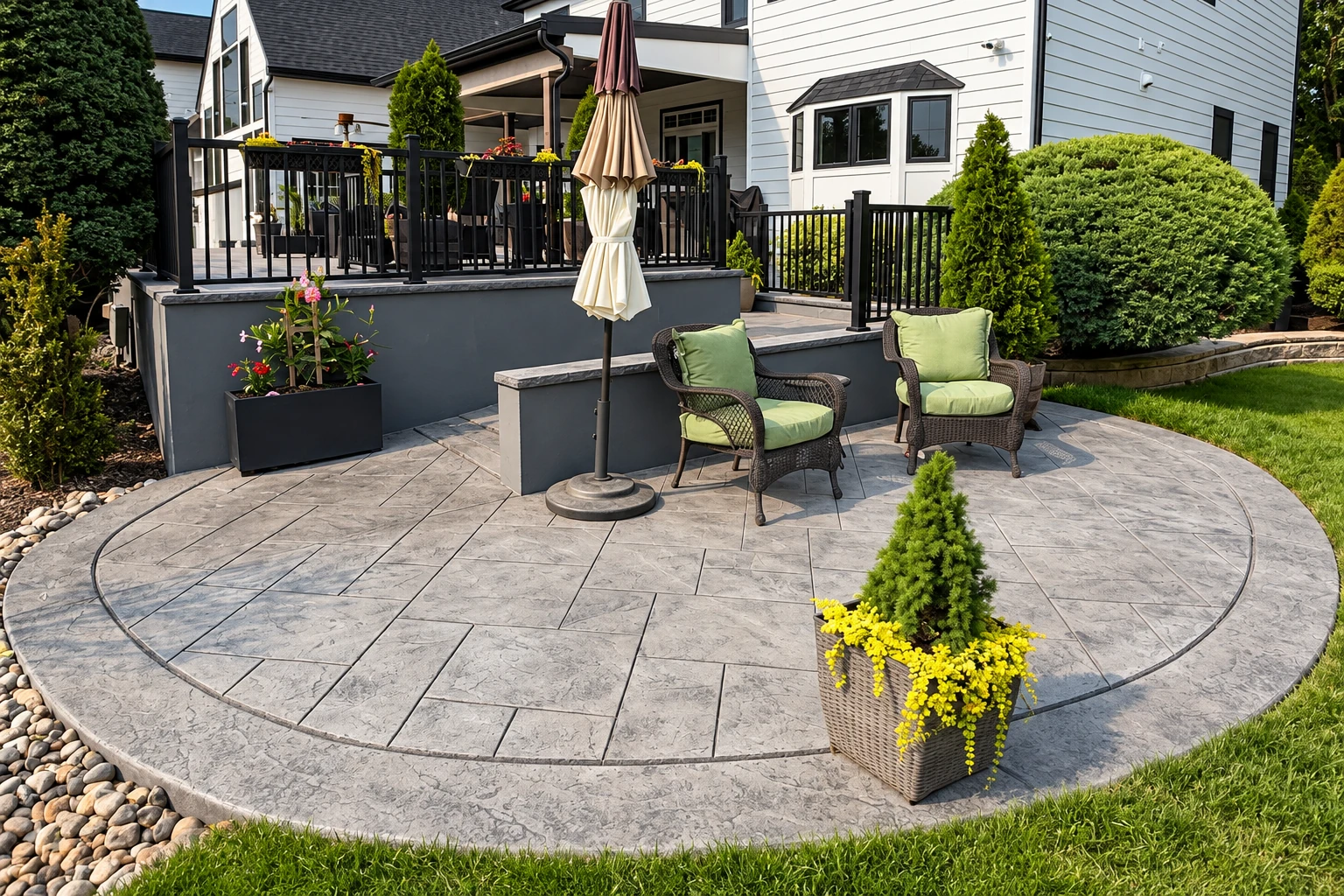
A back patio should shed water toward the yard, not your back door, so we set the slope before the pour and finish it for how you'll use it.
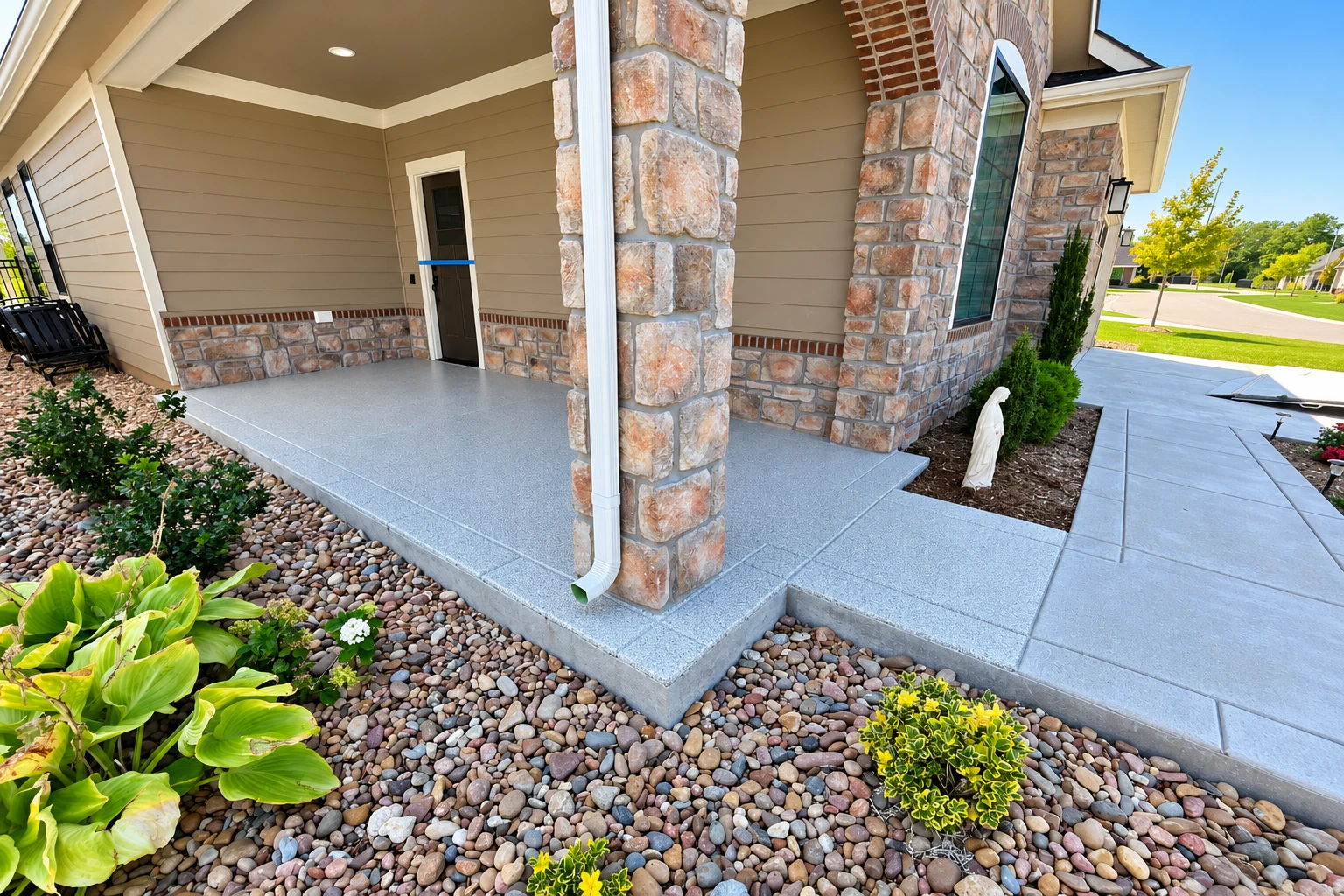
Stamped concrete gives a patio or walk the look of stone or brick, which can suit an older house. It still needs a packed base to stay flat.
Front walks that have heaved or split into trip edges get torn out and poured again with joints cut on time, so any new crack follows a line we chose.
When a garage floor is pitted, chipping or cracked through, a new slab gives you a flat floor that drains toward the door instead of into the corners.
Decorative concrete covers color, exposed stone and patterned borders for a walk, step or patio that has to look right next to an older home's brick and trim.
On sloped lots where the yard keeps washing onto a drive or patio, a concrete retaining wall holds the dirt back and gives the water a planned way out.
Floors for shops, sheds and additions get the same dug-out, packed base as a driveway, because a floor that settles inside a building is hard to fix later.
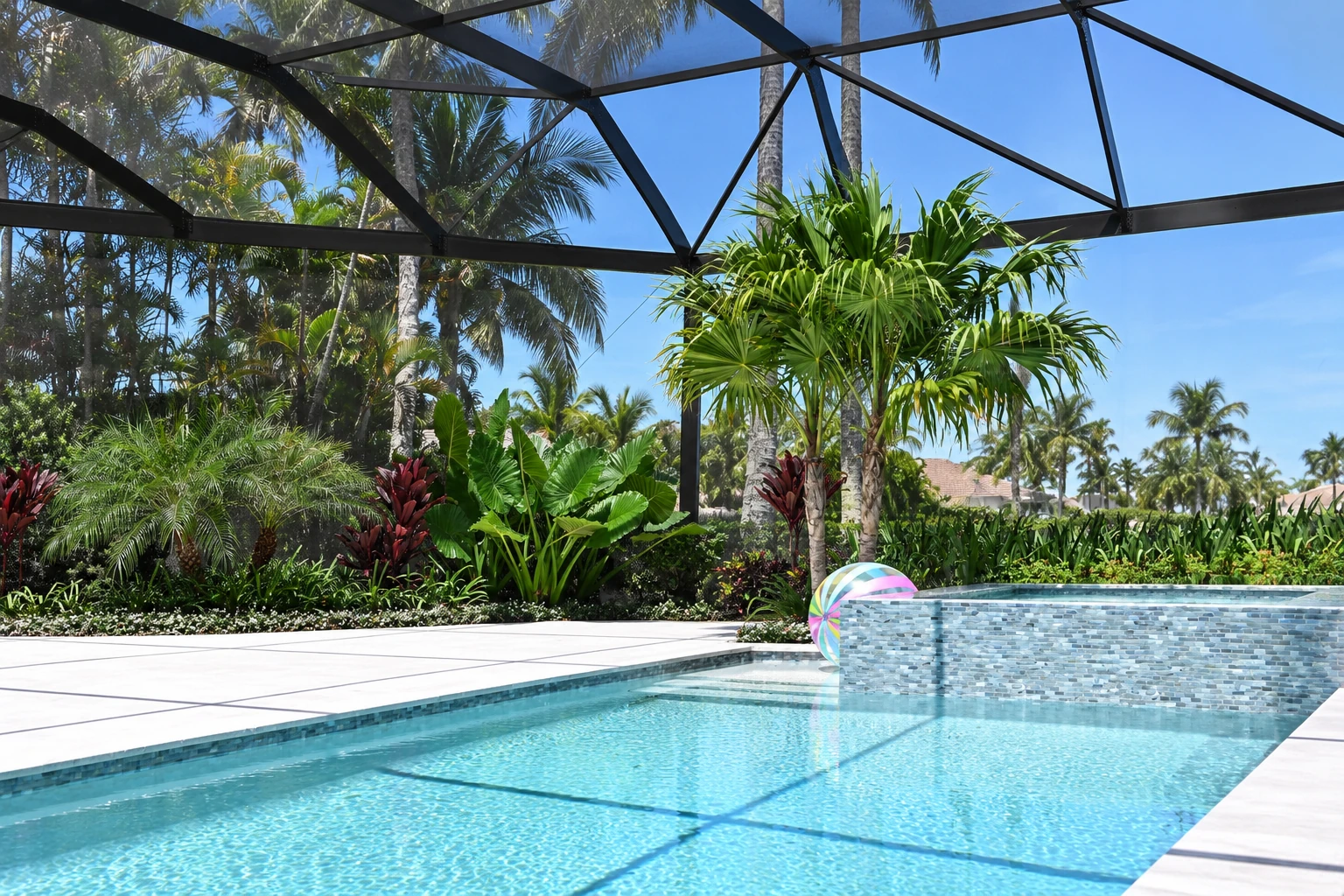
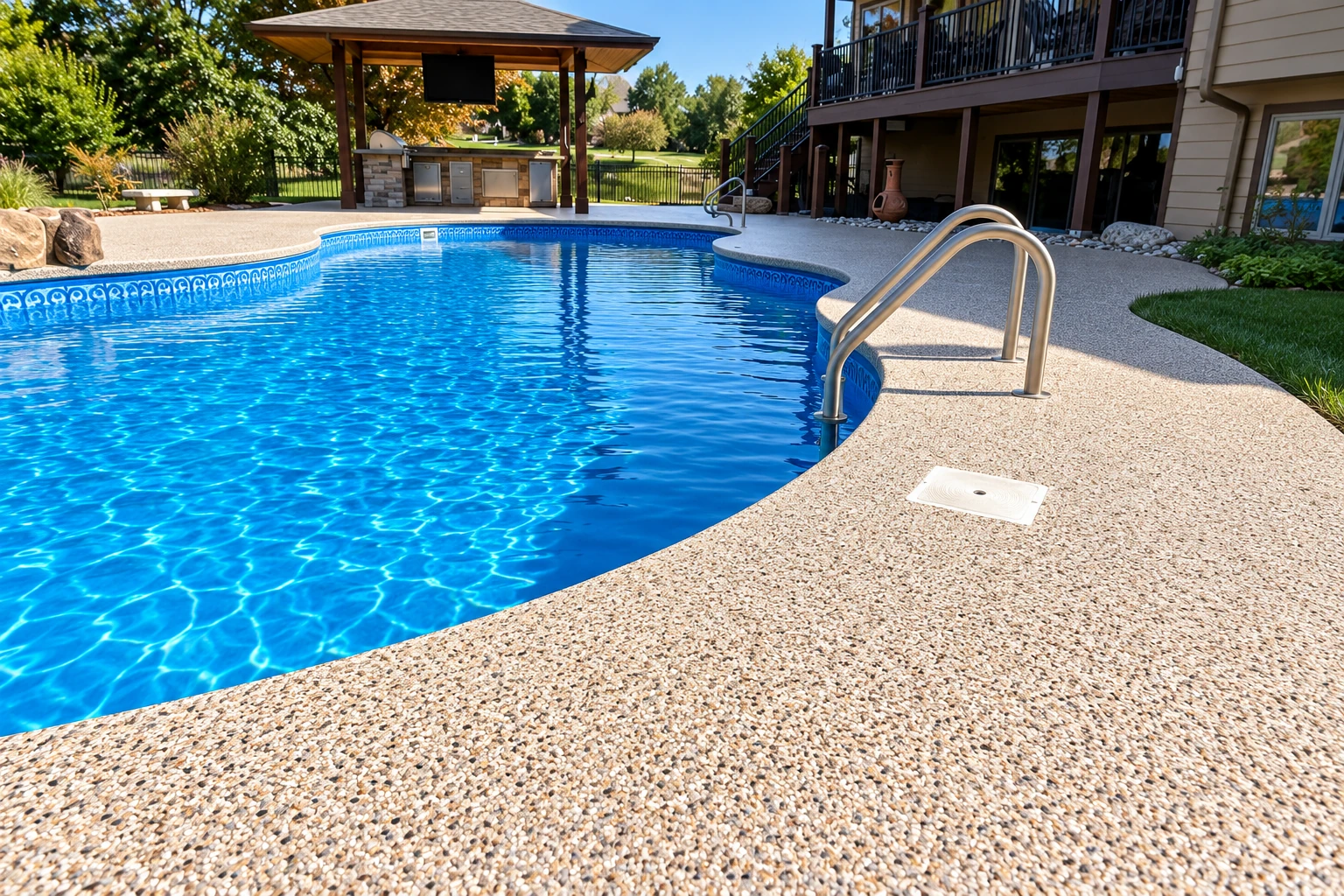
A pool deck has to send splash water away from the pool and the house, with a surface texture that gives your feet some grip when it's wet.
Old front steps that have pulled away from the house or crumbled at the edges get rebuilt on solid footings, with even rises so nobody catches a toe.
For a new house, garage or addition, we build the slab on a graded, packed base with rebar, the steel that holds the concrete together, set before the pour.
Foundation installation covers the footings and walls a new building sits on, and we check the ground and the permit side before anything gets dug.
Rental properties and small businesses with a broken or gravel lot can get a concrete lot built for traffic and graded so rain runs off instead of standing.
Footings are the concrete under walls, posts, steps and additions, and we size and pour them so whatever sits on top stays where it was built.
When part of a slab or foundation has dropped, foundation raising lifts it back toward level, and first we look for the soft ground or water that caused it.
We cut concrete for new doorways, utility trenches and taking out one bad section, so you don't tear out more than the part that's actually failing.
We reply within one business day, and most times I'm the one who calls you back to set a time to come out to your Holly Springs property. I measure, look over the ground and access, and put in writing what the price covers and what it doesn't. The estimate is free, and there's no obligation to book.
(662) 550-8149In Holly Springs, building permit approval comes from City Hall, and the city's posted guide says it usually comes within 1 to 3 days. It runs longer when the job goes before the Planning or Historic Commission or sits in a flood zone, and I cover both below. Before you hire anyone, check that they're licensed with the Mississippi State Board of Contractors and hold the city's privilege license to work inside the city.
We check with the permit office that covers your address before work starts. When the job needs a permit, we handle the paperwork and line up the inspections so you're not chasing them. It's the same way we run jobs in Pontotoc and Batesville, and it means the pour date gets set around the approval instead of ahead of it.
The price moves with the size and thickness of the slab, how much old concrete has to come out, and how much the subgrade, the dirt the slab sits on, needs dug out and packed. The schedule turns on permit approval and curing, the wait while the concrete hardens enough to use. My estimate puts your number in writing, with what it covers and what it doesn't.
I spent years doing upkeep for a property management company, patching walks, steps, drives and slabs across a lot of rentals. Most of the cracked and sunken ones failed because of what was underneath, not the concrete on top. I started this business in Oxford in 2023 to build the work right the first time, and we're best known for driveways, walks, steps and patios that drain and stay flat.
When a budget gets tight, the base is the first thing people want to cut, because nobody sees it once the slab is down. I'd rather cut back on the finish than the base. A plain broom finish, the light texture that keeps a slab from getting slick, on a dug-out, packed base usually holds up longer than a fancy surface poured over raked dirt.
I come out myself to look at the job and write the estimate, and I'm on site running the work with our crew. We're licensed and fully insured, and every job is backed by our satisfaction guarantee. Call (662) 550-8149 or use the estimate request form to set up a visit.
Some of what changes a concrete job here comes from the houses themselves, and some comes from the city's own steps. These are the things I plan around before we set a form.
Many of the historic homes in Holly Springs were built between 1830 and 1860. Around houses like these, new concrete often has to meet old brick, old steps or an old walk at the right height, and the ground near the foundation has usually been worked over more than once. We plan the tie-in and the slope together, so water runs away from the house and not back toward it.
The city's guide asks for at least 24 hours' notice for inspections, and its list includes footing and slab inspections, not just framing and finals. On a job that needs one, the inspection usually has to happen before the concrete covers what's being checked. We call it in ahead of time, so the pour day isn't held up waiting on a sign-off.
When a permit is approved, the city hands out a sign to post on the job site, plus a floodplain placard when the property needs one. That sign has to stay on site until the job is completed. We put it where it can be seen from the street and leave it there through cleanup, so it's never a question on inspection day.
Before I price anything, I walk the lot and look at where water runs off the roof, the yard and the street. A slab that falls toward the house, or sits in the low spot of the yard, will hold water no matter how well it's finished. Fixing that grade before the pour costs less than tearing out a slab later.
Your price comes down to the size and thickness of the driveway, how much old concrete comes out, how much base work the ground needs and the finish you pick. Stamped or colored work costs more than a broom finish, and a spot a concrete truck can't reach adds labor. I'll put your number in writing after I've seen the job.
Check with the city before you pour, and start with the city's posted permit steps, because I won't guess for your address. When a job needs one, the application goes in filled out completely with a site plan, plus a set of plans if required. Approval is usually quick, as I said above, unless historic or flood review comes into it.
If your property is in one of the city's historic districts, yes. Everything in those districts has to be reviewed and approved by the Historic Preservation Committee before any permit can be issued, and you fill out the committee's approval form, called a Certificate of Appropriateness. Ask City Hall whether your address is in a district before we set a pour date.
Property in the flood zone shown on the flood map needs a Floodplain Development Permit application, and the work has to meet the city's flood rules. For floodplain properties, the city's process lists the lowest floor at or above the 100-year flood elevation, recorded on a FEMA elevation certificate. That part matters most when we're pouring a house slab or foundation.
Look the contractor up with the state board mentioned above, and make sure the name on the bid matches the name on the license. Licensed contractors sign bids, contracts and permits in the name on their certificate. The board treats work under any other name as unlicensed contracting, which can bring penalties or a contract or lien that can't be enforced.
You can walk on new concrete well before you can drive on it, because the slab keeps gaining strength while it cures. A driveway keeps you off it longer than a walk or patio, and I'll tell you the wait for your slab before we pour. We'd rather pour early than in midday heat, since a top that dries too fast turns weak and dusty later.
Concrete can still crack, but it shouldn't fail the way the old one did. We cut control joints, shallow lines that give the slab a planned place to crack, before it has a chance to crack on its own. The bigger fix is underneath, because we dig out and pack the subgrade instead of raking dirt level and pouring on top.
Our phones are answered into the evening, until 11 PM on weekdays and 10 PM on weekends, so you can call (662) 550-8149 after work or send the form whenever it suits you.